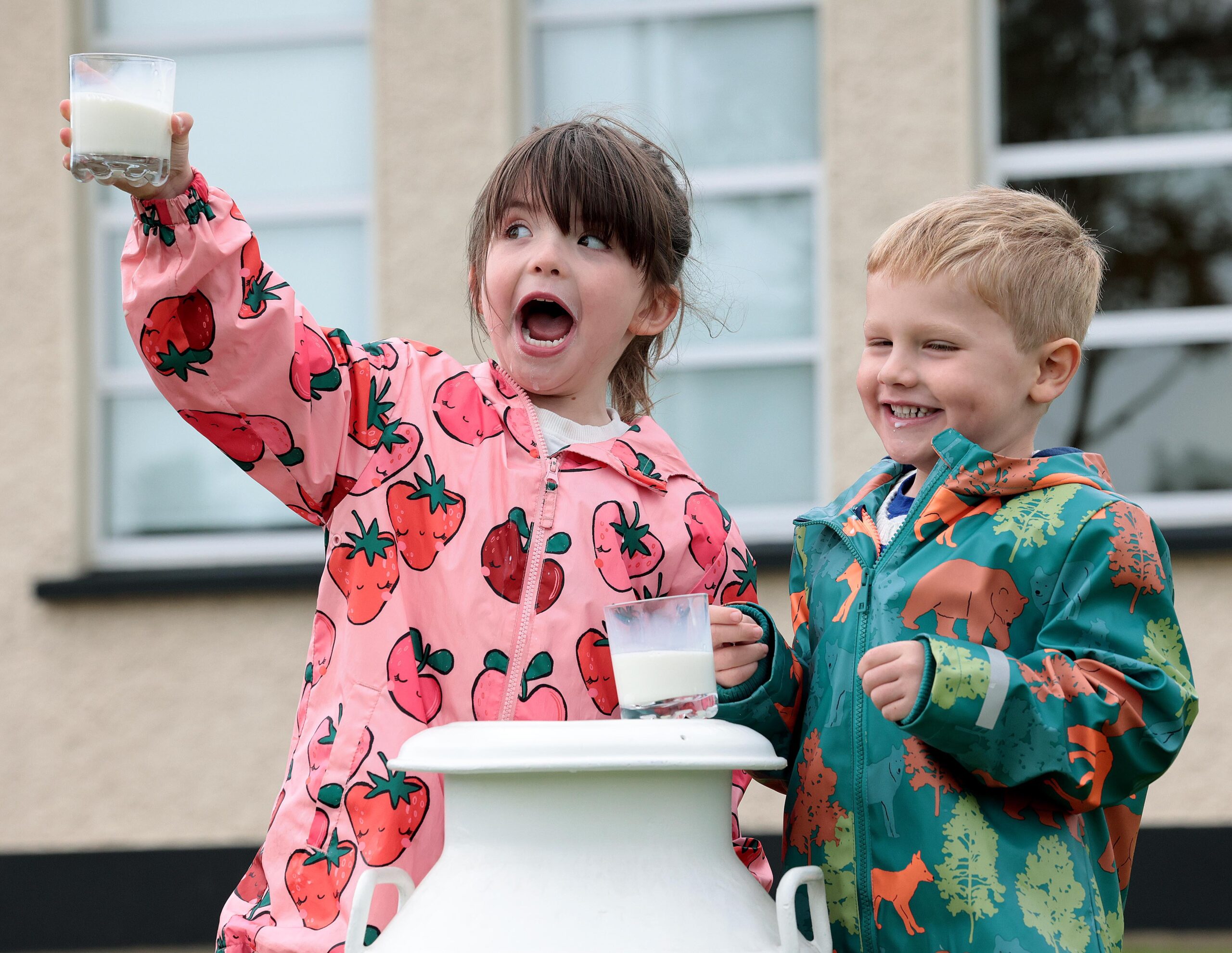


20 October 2026, Dublin: More than half (51%) of Irish teenagers have inadequate calcium intakes, according to research commissioned by the National Dairy Council, as new dietary recommendations from the Food Safety Authority of Ireland (FSAI) reinforce the importance of milk, yogurt and cheese during adolescence.
The findings, from a National Dairy Council-commissioned analysis of the National Teens’ Food Survey II prepared by the Irish Universities Nutrition Alliance in October 2023 support this – revealing that Irish teenagers consume an average of just under two servings of dairy per day, with those consuming more dairy found to have better overall diet quality.
The findings come as the FSAI publishes its Scientific Recommendations for Food-Based Dietary Guidelines for Adolescents in Ireland, recommending four to five daily servings of milk, yogurt and cheese for adolescents, depending on activity levels. Approximately 40% of total bone minerals are acquired during the early teenage years and 95% of adult bone mass has been achieved by 4 years after this peak.
Marking World Osteoporosis Day today (20 October), the National Dairy Council is challenging the perception that bone health is only a concern for older people, highlighting adolescence as a critical period for bone development and calling for greater awareness of the importance of adequate nutrition among younger generations.
Dr Mary Harrington, Senior Nutritionist, National Dairy Council, said: “These new FSAI recommendations reinforce what we’ve consistently highlighted, that adolescence is a critical period for bone development, yet many young people are falling short of the nutrients they need. With 51% of Irish teenagers having inadequate calcium intakes, it’s clear that greater awareness of the importance of nutrition from a young age is needed.”
“The new guidance provides welcome clarity for families navigating conflicting nutritional advice, highlighting the important role that familiar, accessible foods like milk, yogurt and cheese can play in supporting healthy growth and development.”
Two Irish women who understand the importance of prioritising nutrition and long-term health are European elite boxing champion Lisa O’Rourke and fitness expert Nathalie Lennon, who are sharing their personal experiences this World Osteoporosis Day to encourage younger women to think beyond short-term fitness goals.
Following repeated hand fractures and the pressures of making weight, Lisa O’Rourke has transformed her approach to nutrition, training and recovery with the support of Sport Ireland Institute Head of Performance Nutrition, Professor Sharon Madigan. Now competing at 80kg, she recently returned to win European gold, prioritizing adequate fueling and calcium-rich dairy foods as part of a more balanced approach to performance.
Lisa O’Rourke said: “I used to focus so much on making weight and pushing myself in training that I didn’t always give my body what it needed. Going through repeated injuries made me rethink how I approached nutrition and recovery. Working with Sharon Madigan at Sport Ireland Institute has helped me understand the importance of fuelling properly, even when I’m injured. I feel stronger than ever, and I want younger athletes to know that looking after their bodies matters more than reaching a certain weight.”
Fitness expert Nathalie Lennon experienced an eating disorder and the loss of her menstrual cycle for several years following restrictive eating and overtraining early in her career. A subsequent bone density scan raised concerns about her bone health, prompting her to rethink her approach to nutrition and exercise. She now uses her platform to challenge unrealistic body standards and encourage young women to prioritise their long-term health over appearance.
Nathalie Lennon said: “I spent years focusing on how my body looked rather than how it felt. I thought eating less and training harder meant I was healthy but discovering that my bone density was lower than expected was a real wake-up call. Bone health wasn’t something I thought about in my twenties. I want young women to look beyond short-term fitness goals and consider how the choices they’re making today could affect their health in years to come.”
The National Dairy Council is encouraging young people to prioritise nutrition, highlighting the importance of calcium, protein, adequate fuelling and physical activity in supporting lifelong bone health.
Emma Walls, National Dairy Council CEO, added: “Lisa and Nathalie’s experiences show why we need to start these conversations earlier. World Osteoporosis Day is an opportunity to remind younger generations that the foundations for lifelong bone health are built long before older age.”
World Osteoporosis Day takes place annually on 20 October to raise awareness of osteoporosis, fracture prevention and the importance of lifelong bone health.
For more information, visit www.ndc.ie.
ENDS
Notes to Editors
For further information or to arrange an interview, please contact:
Marc Woodard | Springboard Communications | marc@springboardcommunications.ie | 086 829 1121
Deirdre Fitzgerald | Springboard Communications | deirdre@springboardcommunications.ie | 085 206 4835
About the Research
The calcium intake and dairy consumption findings are drawn from a National Dairy Council-commissioned analysis of the National Teens’ Food Survey II, prepared by the Irish Universities Nutrition Alliance in October 2023. The analysis found that 51% of teenagers had inadequate calcium intakes, with average consumption of milk, yogurt and cheese at just under two servings per day. Teenagers who consumed more dairy also had better overall diet quality.
About the National Dairy Council
Established in 1964, the National Dairy Council advocates for the dairy sector as part of an increasingly sustainable food system, a healthy balanced diet, and Ireland’s wider social and economic wellbeing. The National Dairy Council helps explain Irish dairy to the public – where it comes from, how it is produced, and why it matters in everyday life.
It does this by sharing evidence-based information on nutrition, education, sustainability and food production, while also telling the stories of the people behind Irish dairy, including farmers, producers and experts.